

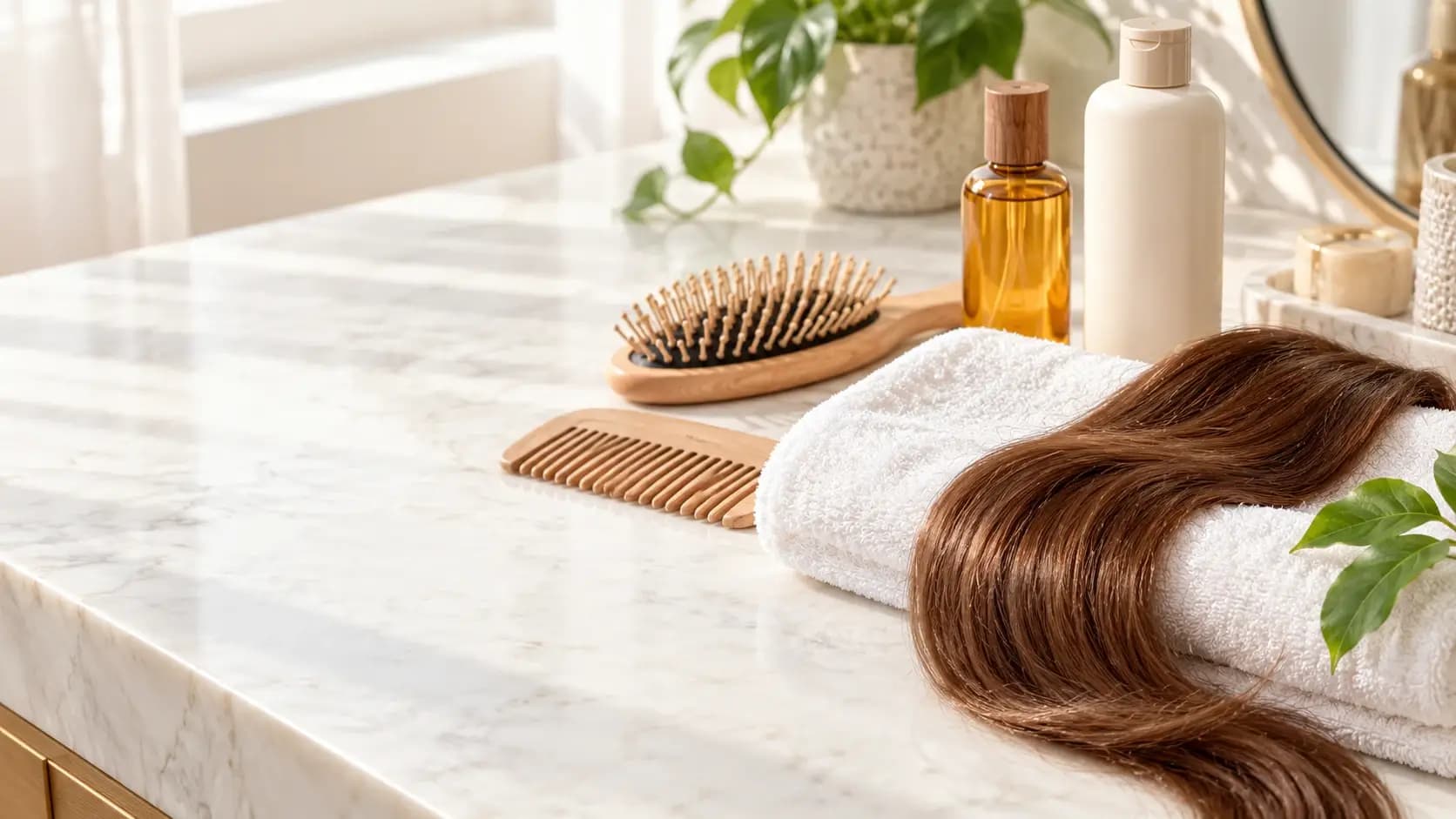
Do you dream of soft, shiny hair that actually looks good for more than a day or two?
Here's the truth: healthy hair doesn't require a shelf full of products or a complicated routine that eats up your morning. What it really takes is four fundamentals — and if you stick to them consistently, you'll see the difference within a few weeks: less breakage, natural shine, and a healthier scalp.
Below are the four best ways to care for your hair, with practical tips you can start using today.
1. Start With the Basics: Wash Your Hair the Right Way
Most hair problems begin with the step we all take for granted — washing. Using the wrong shampoo, or washing too harshly, can undo everything else you do afterward.
Choose a Shampoo for Your Hair Type and Scalp
There's no single shampoo that works for everyone. Dry, curly hair needs a rich, moisturising formula. Oily hair needs a lightweight clarifying cleanser. Colour-treated hair needs a colour-safe formula to keep the shade from fading.
And if your hair is dry, chemically treated or coloured, consider switching to a sulfate-free shampoo — it cleanses gently without stripping your hair of its natural oils.
Follow These Rules Every Wash
Use lukewarm water, not hot. Hot water lifts the hair cuticle and leaves hair drier and frizzier.
Massage your scalp, not your lengths. Shampoo is designed to clean the scalp — the lather running down is enough for the rest.
Use your fingertips, not your nails, with gentle circular motions for about a minute.
Rinse thoroughly. Leftover product residue leaves hair dull and weighed down.
Don't over-wash. Two to three times a week works for most hair types; oily hair may need a little more.
2. Moisture Is the Secret to Softness: Conditioner + a Weekly Mask
If shampoo is the "cleansing" step, moisture is the "repair" step — and no hair type can skip it. Even oily hair needs hydration through the ends.
Condition After Every Wash
Apply conditioner from the mid-lengths to the ends only, keeping it away from your scalp so your roots don't get greasy quickly. Leave it on for two to three minutes, then rinse with water as cool as you can stand. Cool water helps seal the cuticle and gives instant shine.
Use a Deep Mask Once a Week
This is the step that makes the biggest visible difference on damaged hair. A deep treatment replaces the moisture and protein your hair has lost — especially important if you use heat tools or colour your hair.
Look for formulas with keratin to repair and smooth damaged strands, shea butter or argan oil for deep hydration, or panthenol to strengthen the hair shaft.
Add a Serum or Oil to Damp Hair
After your shower, while your hair is still damp, work a few drops of a lightweight serum or hair oil through the ends. This simple step locks moisture into the strand and noticeably reduces frizz. The secret is restraint — a few drops is plenty, and too much will leave hair looking greasy.
3. Protect Your Hair From Heat and Harsh Styling
Most of the damage we see in hair isn't caused by a lack of products. It's caused by small daily habits we repeat without thinking.
Never Use Heat Without Protection
Flat irons, blow dryers and curling wands reach temperatures high enough to damage the structure of your hair. Always apply a heat protectant spray before any hot tool, and set the temperature to medium rather than maximum.
Small Habits, Big Difference
Dry with a microfibre towel or a cotton T-shirt instead of rubbing with a rough towel — friction is what causes frizz and split ends.
Use a wide-tooth comb and start detangling from the ends, working your way up.
Avoid very tight hairstyles and snapping elastics; switch to fabric or silk-lined hair ties.
Try a silk or satin pillowcase. It reduces overnight friction and keeps your style intact in the morning.
Space out chemical treatments. Colouring, straightening and protein treatments close together will exhaust your hair — give it time to recover in between.
4. Look After Your Scalp and Feed Your Hair From Within
Your scalp is the soil your hair grows from. No matter how good your products are, an unhealthy scalp means weaker hair.
Scalp Care
Massage your scalp for five minutes a day with your fingertips. It stimulates circulation — and it feels good, too.
Treat dandruff as soon as it appears with a dedicated anti-dandruff shampoo. Left alone, it leads to itching and shedding.
Clear away product buildup every couple of weeks with a scalp scrub or clarifying shampoo, especially if you use styling products often.
Eat for Your Hair
Hair is made mostly of protein, so it reflects your diet directly. Aim for a balanced intake of:
Protein: eggs, fish, legumes
Iron and zinc: red meat, spinach, nuts
Omega-3: salmon, flaxseed, walnuts
B vitamins and biotin
Water: at least eight glasses a day
Don't Skip Your Trims
Taking 1–2 cm off the ends every 8 to 12 weeks stops split ends from travelling up the hair shaft and keeps your hair looking fuller and healthier.
When should you see a doctor? If you notice sudden or heavy shedding, bald patches, or persistent itching and redness, book an appointment with a dermatologist. The cause may be hormonal or a nutritional deficiency that needs proper testing.
The Bottom Line
Healthy hair isn't complicated. It comes down to four things: washing correctly, moisturising consistently, protecting from heat, and caring for your scalp and nutrition.
And more important than any single product is consistency. Pick the right products for your hair type and give your routine at least a month before you judge the results.